

Seeking out the
5000 greatest films
in a century of cinema


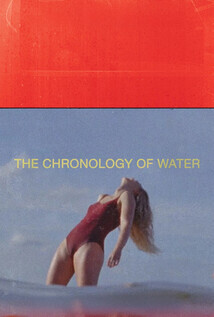

The Chronology of Water



Produced by Charles Gillibert, Kristen Stewart, Michael A. Pruss, Andy Mingo, Yulia Zayceva, Max Pavlov, Svetlana Punte, Maggie McLean, Dylan Meyer, and Christian Vesper
Editing: Olivia Neergaard-Holm
Music: Paris Hurley
Release Date: 05 December 2025
Color: Color
Kristen Stewart has been a sharp, instinctive actor whose choices in material and projects have always been savvy ever since the Twilight series made her a mega-star. From Greg Mottola's Adventureland, in a role I can't imagine anyone embodying better, to Olivier Assayas's magnificent Clouds of Sils Maria, to Kelly Reichardt's surprising Certain Women, to Rose Glass's unsurprising Love Lies Bleeding, she's always been able to find unexpected nuance and depth in films that were already rich and deep. Even in underwritten pictures, like Woody Allen's Café Society and Elizabeth Banks's Charlie's Angels, she brings something intrinsically compelling to a role that makes these films far better than they have a right to be. So it's not a surprise that Stewart's directorial debut would be something that demands you pay attention and doesn't particularly care if you don't like it.
The Chronology of Water is based on Lidia Yuknavitch's 2011 memoir that chronicles the author's abusive childhood and escape from her household via a swimming scholarship. Aiming for the Olympics, she soon flunks out due to drug and alcohol abuse. Over many years of quieting her demons through substances and sex, she eventually finds an effective way of integration through writing, lashing out on the page with raw, graphic, personal stories. She doesn't soften her approach after enrolling at the University of Oregon, which helps secure her a spot on the student team selected to work with Ken Kesey on his collaborative novel, Caverns. With the aging Kesey as a mentor and her sister Claudia as a stable figure in her life, she is able to channel her life experiences into an authorial voice.
Stewart also has a unique and powerful voice, telling this story in an aresivly fragmented style. Shooting in 16mm, mostly in tight close-ups, and edited in a frenetic but never random manner, this 128-minute portrait of an artist as a young woman is a lot to take in. It's hard not to be overwhelmed and exhausted by everything Stewart puts into this picture, and the unrelenting way she goes about it. The film certainly won't work for everyone, but it's an impressive undertaking that I can only describe as a fiercely internal character study.
Imogen Poots gives an excellent lead performance. Even if you can't place a face with her name, you know this fine actor from dozens of supporting roles in movies like 28 Weeks Later, Me and Orson Welles, Solitary Man, Jane Eyre, Fright Night, A Late Quartet, Green Room, The Father, and French Exit. The key supporting cast is also first-rate, especially Thora Birch as her sister, Michael Epp as her abusive father, and Jim Belushi as Kesey. Hat tips to editor Olivia Neergaard-Holm, cinematographer Corey C. Waters, and production designer Jen Dunlap for their fine work in bringing this unusual period drama to energetic life.
Imogen Poots gives an excellent lead performance in Kristen Stewart's aresivly fragmented, fiercely internal character study.