

Seeking out the
5000 greatest films
in a century of cinema


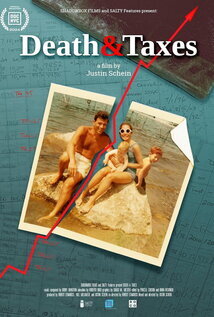

Death & Taxes






Release Date: 18 July 2025
Color: Color
While I've never been a huge fan of first-person documentaries, in which the filmmakers tackle an issue by telling their own life story, the ways in which our tax system is designed to favor wealthy people is a topic politicians and the media love to tell us is too dull for people to care about. So, if that's true (I've never bought into the belief myself), why not take the personal approach? With Death & Taxes, documentarian Justin Schein explores the American tax system with some of the most prominent experts in the field—from the most consequential anti-tax advocate, Grover Norquist, to the most high-profile fair-taxation champion, former Secretary of Labor, Robert Reich. To have these two men from opposite ends of the political spectrum in the same film is impressive. Other insightful talking heads include economists Paul Krugman and Stephen Moore; progressive authors Chuck Collins, Alissa Quart, and Anand Giridharadas; Republican operatives Frank Luntz and David Stockman, and sociologist Matthew Desmond. These folks do a good job of explaining things like how people who make their income passively through investments are taxed at a much lesser rate than those who earn their living through their labor, how capital gains taxes on inherited wealth and property can easily be avoided through legal mechanisms like the "step-up in basis", and the various problems of wealth inequality as seen through the lens of the estate tax. But the heart of the film, and why the film works so well, is the story of Schein's father, Harvey.
Death & Taxes is the story of Harvey Schein and his passion for avoiding paying taxes whenever legally possible. The film is a loving portrait of a fascinating man who rose from extreme poverty to tremendous success across several industries before retiring and becoming obsessed with reducing his estate tax. The young Schein has been recording his family meetings for decades, tracking his father's advice on financial matters. The film darts back and forth in time between the story of how Harvey became a self-made millionaire, how the wealth has been a boon to his family (especially his budding filmmaker son), and how his obsession with "the death tax" places tremendous stress on his family, especially his wife, Joy.
Watching how a single-minded single-issue conservative ideology drives a disastrous wedge between a happily married couple is illuminating. It's a living example of how money can bring you happiness, yet, more often than not, it brings misery. The film tells a specific story, but it feels like something similar could happen around a host of issues. In this case, it's the estate tax that causes a man to upend his family and take his wife away from the things that make her happy, but we can easily see how organizing one's life around any one political belief could lead to a similar outcome, and we can picture how a virtually identical story could unfold in a left-wing household around a number of different issues.
Justin threads a delicate needle, balancing family duty and political discord. His sincere love for his father (a genuine love, not mere obligation) enables an uncomfortable conversation with the viewer about family wealth, legacy, ideology, and mortality. The most tragic line in the film comes somewhat early, when Harvey states that the happiest day of his life hasn't happened yet and will hopefully come twenty years after his death, when his family will look back on all the work he did to set them up and hold on to their wealth. Anyone who imagines the happiest day in their life as taking place two decades after they've kicked the bucket is not exactly living in the present moment, and through Joy, we see the cost this man pays for living for a hypothetical future that his family doesn't even want, at least not in the way he does.
Death & Taxes covers a myriad of issues and themes in a way that is both open-minded and not heavy-handed. The speed at which our economy has changed over the past decade, and how the wealth gap has become a chasm, means that the economic specifics Justin and the experts he interviews discuss were wildly out of date long before this film had any kind of release. One should multiply all numbers anyone cites in this movie by a factor of at least 3 (and in some cases 10!). But, since this is a movie about family and how the walls many build around their wealth eventually become like a prison that keeps everyone else out, the exact numbers are not all that important.
Digging deep into the inequities of America's system of taxation, documentarian Justin Schein tells the highly personal story of his father, self-made millionaire Harvey Schein, and the consequences of his obsession with avoiding the estate tax.