

Seeking out the
5000 greatest films
in a century of cinema


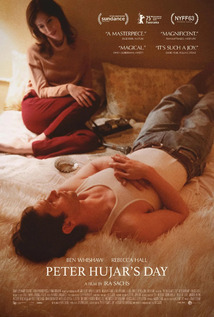

Peter Hujar's Day



Produced by Jonah Disend and Jordan Drake
Editing: Affonso Gonçalves
Release Date: 06 November 2025
Aspect Ratio: 1.37 : 1
Color: Color
The latest from Ira Sachs (Love Is Strange, Little Men, Passages) is an interesting curiosity that reimagines a 1974 conversation between photographer Peter Hujar and his friend Linda Rosenkrantz, a New York writer who was the founding editor of Auction magazine, for which Hujar often shot covers. Rosenkrantz was known for writing "nonfiction fiction," such as her 1968 novel Talk, which was based on the taped conversations between herself and two friends. At the point where this film takes place, she was embarking on a similar project, asking several artistic people she knew to write down everything they did on one particular day, then to meet with her to discuss it. The project was abandoned, but forty years later, in 2021, a transcript of her interview with Hujar was found among his papers and published as a book.
Sachs takes that transcript and stages the conversation as if, in addition to being tape-recorded, it had also been filmed documentary-style on 16mm color film. Along with cinematographer Alex Ashe and production designer Stephen Phelps, Sachs recreates 1974 Manhattan with the perfection of the ordinary. Watching the film, you get the palpable sense of reality, the same way you do when watching actual footage from this period. You can practically smell this apartment and feel the time of year. Ben Whishaw as Hujar and Rebecca Hall as Rosenkrantz personify these real-life characters with surprising verisimilitude. This is especially true of Whishaw, whom I was starting to get sick of seeing in movies because he seemed to be playing the same kind of character over and over again, and I was wondering if he was capable of anything else. Boy, is he ever! I've never seen any footage or heard any interviews with the real Hujar, but I knew many people when I lived in New York who carried themselves, spoke, smoked, sat, reclined, and talked about their work in precisely the ways Whishaw embodies.
The film offers both Whishaw and Miller the opportunity to deliver meticulously crafted performances that never feel affected, put-on, or false, and they are both more than capable of rising to that challenge. The movie also offers a time-capsule-like glimpse of 1970s New York life. Of course, the question arises: Does this film do anything else? Does Peter Hujar's Day offer the viewer anything more than two outstanding performances and a meticulous re-creation of a time and place? I think it does, though, while watching this 76-minute two-hander, you do find yourself understanding why Rosenkrantz didn't follow through with this book project. Having someone recount their previous day with forensic accuracy isn't especially gripping, even if the person is a part of a storied downtown art scene who spent much of that day photographing Allen Ginsburg.
I think if one is listening carefully to the conversation, one may miss the point of the movie. There isn't anything in the day Peter Hujar describes that would provide the audience with catharsis or an epiphany. These characters aren't having a long, wide-ranging My Dinner with Andre-style conversation that takes us from Mount Everest to the cigar store around the corner. There are some intriguing details in the story he recounts, but it's the overall experience of spending time with these two people that provides insights. Several aspects of this conversation, and the two people having it, cause the viewer (at least this viewer) to drift away from the actual spoken words and begin contemplating the specificities of this setting, period, and personality. Hujar was a young, gay, lesser-known contemporary of famous photographers like Richard Avedon and Diane Arbus, and he was friends with many iconic, intellectual Jewish women writers like Susan Sontag, Fran Lebowitz, and Rosenkrantz. He never achieved the heights of success that many of his peers enjoyed, but was a key figure in New York's gay liberation movement. Thus much of his recounting of his day is peppered with complaints about how he's perceived by people more famous than him, how difficult it is to get work now that he's quit the commercial world, the cost of living (though it was absurdly cheap back then compaired to now or even fourty years ago), and other big and small personal struggles, revelations, and routines of a working artist.
A 1974 conversation/interview between photographer Peter Hujar and writer Linda Rosenkrantz is meticulously reimagined by director Ira Sachs and actors Ben Whishaw and Rebecca Hall, elevating the film beyond a mere exercise.